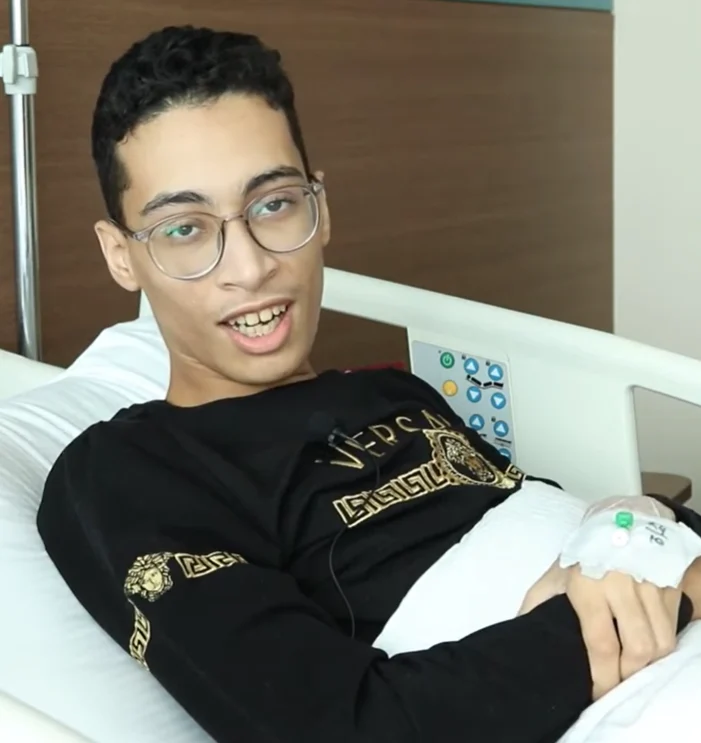

For most children, bedtime means turning off the lights and going to sleep. For Taha, a 14-year-old boy from Algeria, it was very different. Since infancy, his nights had been closely tied to blue-light phototherapy, a treatment he needed to keep his dangerously high bilirubin levels under control.
Taha was eventually diagnosed with Crigler–Najjar syndrome type I, a rare inherited disorder that prevents the liver from properly processing bilirubin. After years of living with the condition and relying on daily phototherapy, liver transplantation became the definitive treatment for his disease.

A photo of Taha at Istanbul Airport after arriving safely in Turkey.
Living with Crigler–Najjar Syndrome: 14 Years Under Phototherapy:
Taha developed jaundice when he was only 10 days old. Although his mother’s pregnancy had been carefully monitored and he was born at a healthy weight of 3.5 kg, the jaundice did not resolve as expected.
Doctors started intensive blue-light phototherapy to reduce the bilirubin level in his blood. The treatment helped control the bilirubin, but the persistent jaundice indicated that there was an underlying disorder affecting bilirubin metabolism.
The family had previously lost another child at only 13 days of age following severe jaundice. This made Taha’s condition particularly concerning and led to further investigations.
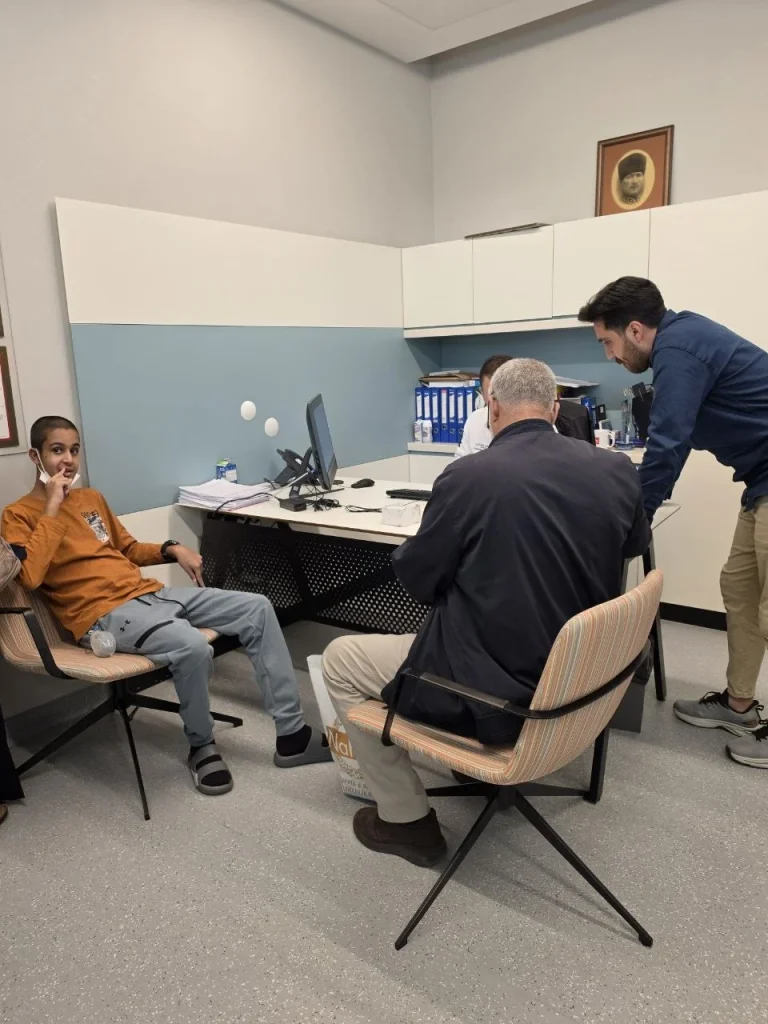
Taha during one of his medical follow-up appointments after undergoing a liver transplant in Turkey.
Genetic testing performed at Antoine Béclère Hospital in France confirmed that Taha had Crigler–Najjar syndrome type I. His parents were asymptomatic carriers of the condition, while his three sisters were healthy.
Crigler–Najjar syndrome type I is caused by severe deficiency of the UGT1A1 enzyme, which is responsible for conjugating bilirubin and helping the body eliminate it. As a result, unconjugated bilirubin can accumulate to very high levels in the blood.
This accumulation can affect the brain and cause bilirubin-induced neurological damage (kernicterus). Depending on its severity, neurological complications can include hearing impairment, movement disorders, and speech difficulties.
For Taha, phototherapy therefore became an essential part of daily life. He required approximately eight hours of blue-light phototherapy every day, with his family carefully maintaining the treatment routine.
At around five years of age, he began experiencing neurological symptoms, including balance difficulties and dysarthria, a speech disorder affecting the ability to produce speech normally. Brain MRI also showed mild changes involving the basal ganglia.
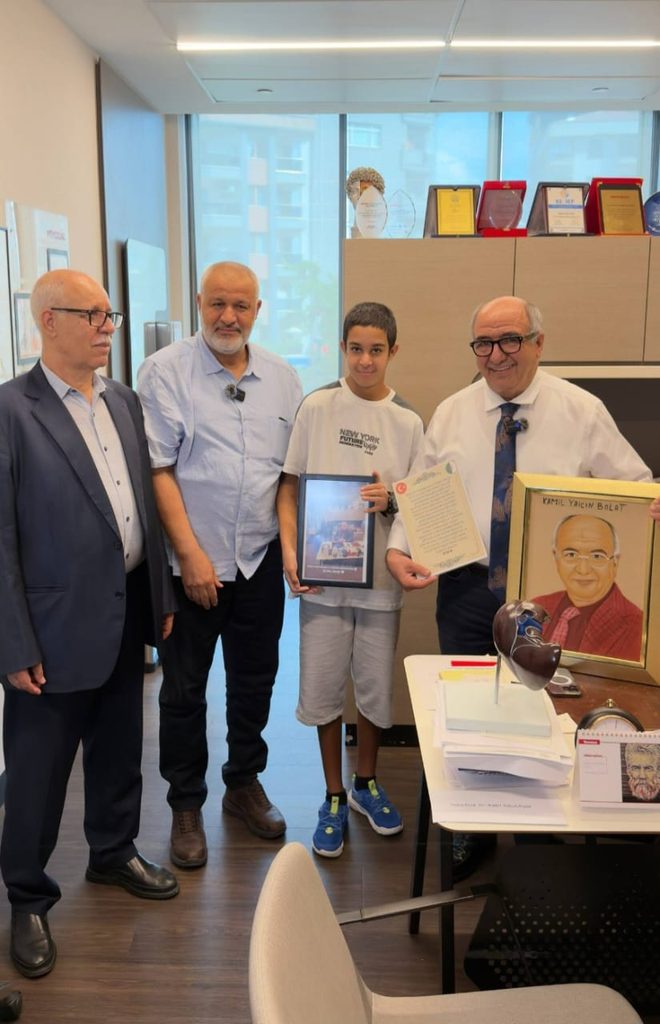
A photo of Taha with Turkish surgeon Prof. Kamil Yalcin Polat, who performed his liver transplant.
Despite continued phototherapy, maintaining adequate bilirubin control became increasingly difficult. By September 2025, Taha’s bilirubin level had reached 459 mg/L (45.9 mg/dL), accompanied by elevated liver enzymes.
At this stage, the long-term risks associated with severe hyperbilirubinemia made it necessary to consider a definitive treatment.
Liver Transplantation in Crigler–Najjar Syndrome:
For patients with Crigler–Najjar syndrome type I, liver transplantation can provide the functional UGT1A1 enzyme activity that is severely deficient from birth. Unlike phototherapy, which controls bilirubin levels without correcting the underlying genetic disorder, liver transplantation addresses the metabolic defect by replacing the patient’s liver with a functioning donor liver.
Because of the rarity and complexity of Taha’s condition, his family traveled to Turkey for specialized medical evaluation and treatment.
After reviewing his medical history, genetic diagnosis, neurological complications, and persistently high bilirubin levels, the medical team determined that liver transplantation was the appropriate definitive treatment.
Taha successfully underwent liver transplantation in Turkey. Following the procedure, the transplanted liver provided the enzyme activity required for normal bilirubin metabolism.
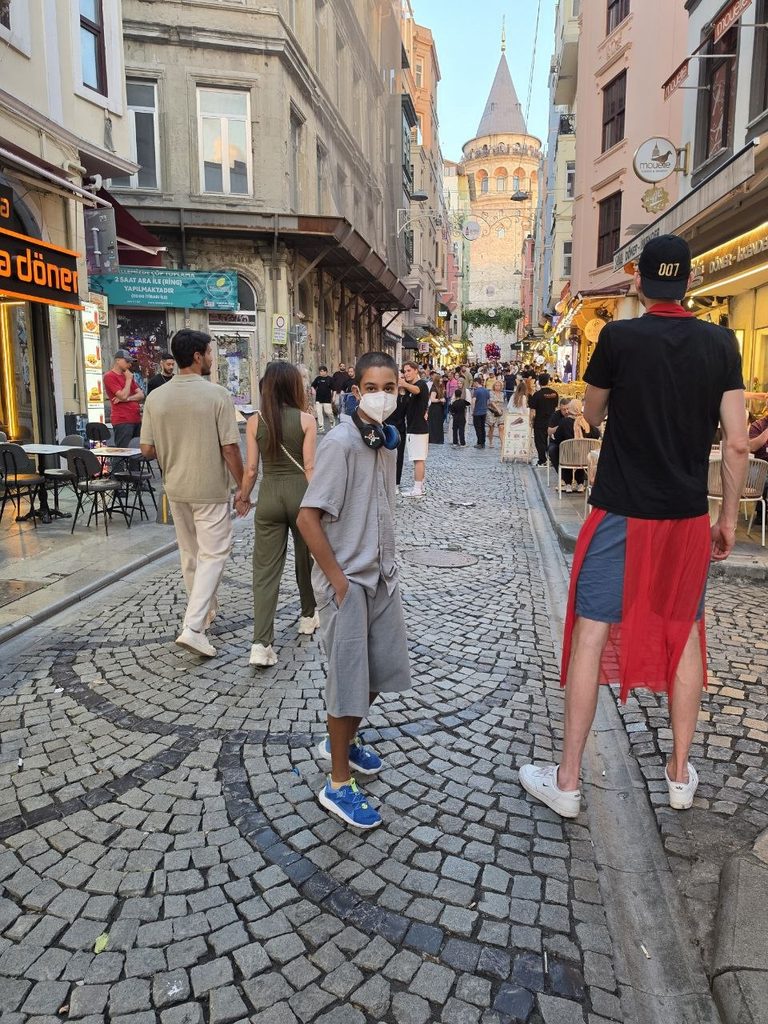
Taha in front of the Galata Tower, in Istanbul, after completing all his post-transplant medical follow-ups, preparing to return home to Algeria.
As his bilirubin levels decreased, the need for continuous phototherapy came to an end. After approximately 14 years of depending on blue-light treatment, Taha no longer needed to organize his daily life around the phototherapy device.
Today, Taha continues his medical follow-up after transplantation and is recovering from the effects of a condition that had shaped much of his childhood. Some neurological problems that developed before transplantation may persist, but the transplant has addressed the underlying metabolic disorder and freed him from lifelong dependence on phototherapy.
For Taha and his family, liver transplantation marked the beginning of a new chapter — one in which his life is no longer defined by the blue light he needed every day since infancy.
What does the service include? — Complete Steps
When you contact us, your journey begins with clear and organized steps:
We analyze your entire medical file with a team of specialist doctors — free of charge and without any obligation.
We determine your eligibility for treatment and explain the available options clearly and transparently.
If you have a living family donor, we evaluate their health status to ensure compatibility and safety.
We develop a clear treatment plan with full details of the cost — no surprises.
We handle hotel bookings, transfers, and all logistics so you travel with peace of mind.
Our team is with you at every appointment and medical decision — you won't be alone for a single moment.
Even after you return home, our team is available on WhatsApp for any questions or medical follow-up.
Are you facing a similar case?
Free medical file evaluation — Reply within 24 hours — Multilingual specialist team
Send your medical file now+90 537 691 76 95 — Available 7 days a week